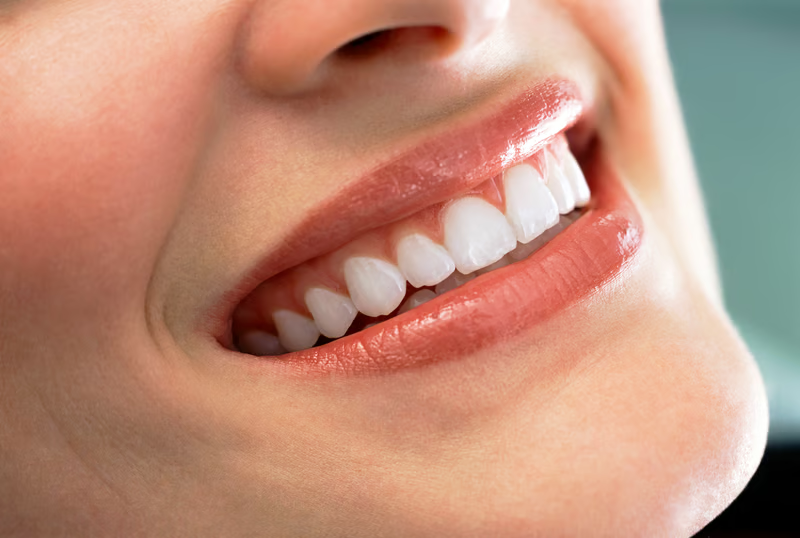
If you’ve been looking into ways to improve your smile, you may have likely come across teeth bonding as an option. It gets mentioned a lot, and for good reason. But with so many cosmetic treatments available, it’s natural to wonder whether it’s actually the right choice for your specific situation, or whether something else might serve you better.
This guide is designed to help you answer exactly that question.
What Is Teeth Bonding?
Before getting into when bonding works best, it helps to understand what the treatment actually involves. Composite bonding, also called teeth bonding or dental bonding, is a procedure where a tooth-coloured resin is applied directly to the surface of a tooth, shaped by hand, hardened with a curing light, and polished to blend naturally with the surrounding teeth.
It’s one of the most conservative cosmetic dental treatments available. In most cases, very little to no natural tooth structure needs to be removed. It can also be completed in a single appointment, and anaesthetic is generally not required.
For the right patient and the right concern, it delivers great results with minimal fuss.
When Is Teeth Bonding Used? The Suitable Candidates
Cosmetic bonding for teeth tends to work particularly well in the following situations:
You Have a Minor Chip or Crack
Dental bonding for chipped teeth is one of its most common and successful applications. If you’ve broken a small edge off a tooth, bonding resin may be the solution to help your teeth be shaped and polished to restore their natural appearance quickly and comfortably. For minor chips, it’s often the most practical and cost-effective solution available.
Surface cracks that are cosmetic rather than structural can also be addressed effectively with bonding, smoothing over the crack and reducing any associated sensitivity.
You Want to Close a Small Gap
Tooth bonding for gaps is another well-suited use of this treatment. Small spaces between teeth, particularly the gap between the two upper front teeth, can often be reduced or closed by applying resin to the sides of the adjacent teeth. For minor spacing concerns, this can be achieved in a single visit without any orthodontic treatment.
You Have Stubborn Discolouration
When teeth discolouration does not respond to whitening, such as staining that comes from within the tooth itself due to past trauma or certain medications, composite resin tooth repair can cover the affected surface with a shade matched to your surrounding teeth. It’s a straightforward solution for isolated discolouration that would otherwise be difficult to treat.
You’re Looking for a Quick, Conservative Fix
One of the clearest indicators that bonding is the right choice is when you’re after a minor cosmetic dental repair rather than a comprehensive smile transformation. Bonding is ideal for patients who want a targeted improvement without committing to a more involved or costly procedure.
You’re Not Ready for a Permanent Change
Unlike veneers, which require some preparation of the natural tooth surface, dental bonding involves minimal to no alteration of your existing tooth structure. This makes it a good option for patients who want to improve their smile but aren’t ready for a more permanent commitment.
In many cases, bonding can also be reversed or updated later if your goals change.
When Might a Different Treatment Be More Suitable?
Bonding works beautifully within its scope, but it does have limitations worth understanding.
When veneers may be a better fit: If you’re looking to improve the appearance of multiple front teeth at once, or you want a result that is more stain-resistant and longer-lasting, porcelain veneers may be worth considering. Veneers involve more preparation and a higher upfront cost, but they offer greater durability and a more consistent aesthetic across the smile.
When a crown may be more appropriate: For a tooth that is significantly damaged, heavily restored, or structurally compromised, a dental crown provides more comprehensive protection and support than bonding alone.
When clear aligners are the right answer: If the underlying issue is misalignment or spacing that goes beyond a minor cosmetic concern, clear aligner treatment addresses the root cause rather than masking it. Your dentist can help you determine which approach is most appropriate.
Understanding dental bonding vs veneers and how both compare to other options is really a conversation best had with a dentist who can look at your specific teeth and goals in person.
What About Cost and Longevity?
Dental bonding is generally one of the more accessible cosmetic treatments in terms of upfront cost. With proper care, composite bonding may last several years before needing a touch-up or replacement, though longevity varies depending on the location of the tooth, your bite, and lifestyle habits such as diet and whether you grind your teeth.
The relatively lower cost and ease of repair make bonding a sensible starting point for many patients, particularly for minor concerns where a more involved treatment may not yet be warranted.
The Right Treatment Starts With the Right Conversation
Dental bonding is a genuinely versatile and good option for a wide range of minor cosmetic concerns, but it works best when it’s matched to the right situation. The best way to find out if it’s right for you is to have a proper assessment with a dentist who can look at your teeth, understand your goals, and give you an honest recommendation.
If you’re considering cosmetic teeth bonding for your teeth and want to explore your options, the team at Vineyard Dental Sunbury is here to help.
Discuss your concerns in a consultation with our team. We are here to give you information and assess whether teeth bonding treatment is right for you.
Frequently Asked Questions
When is teeth bonding used?
Teeth bonding is most commonly used for minor cosmetic concerns such as chipped or cracked teeth, small gaps between teeth, surface discolouration that doesn’t respond to whitening, and minor reshaping of uneven teeth. It’s best suited to targeted, single-tooth improvements rather than comprehensive smile makeovers.
Is composite bonding permanent?
Composite bonding is not considered permanent. The resin can be modified, repaired, or removed, and it will eventually need to be touched up or replaced over time. This makes it a relatively low-commitment option compared to treatments like veneers.
How long does dental bonding last?
With proper care, dental bonding may last several years. Longevity depends on the location of the bonded tooth, bite forces, and habits such as grinding or biting hard objects. Your dentist will monitor the bonding at regular check-ups.
Is dental bonding better than veneers?
Neither is universally better because it always depends on your situation. Bonding is more conservative, faster, and more affordable, making it ideal for minor repairs. Veneers are more durable and stain-resistant, and better suited to more comprehensive cosmetic improvements. Your dentist can advise which is right for you.
Does dental bonding require anaesthetic?
In most cases, no. Dental bonding is generally painless and doesn’t require anaesthetic unless it’s being used to treat a decayed tooth at the same time.
Can bonding be repaired if it chips?
Yes. One of the practical advantages of composite bonding is that it can be repaired relatively easily. Your dentist can add more resin and reshape the area at a follow-up appointment if the bonding chips or wears over time.